BY ENOCK MUSIKA
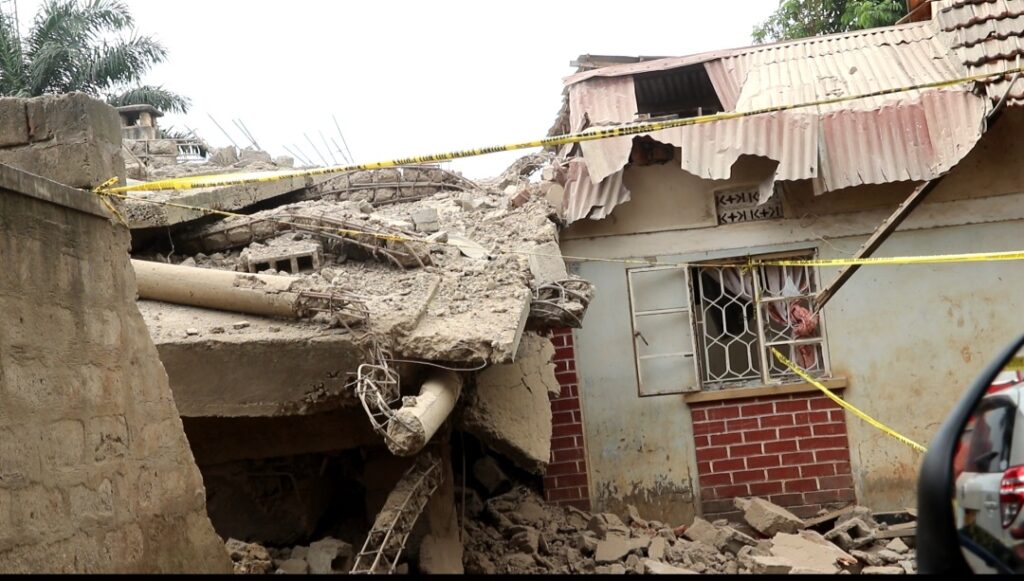
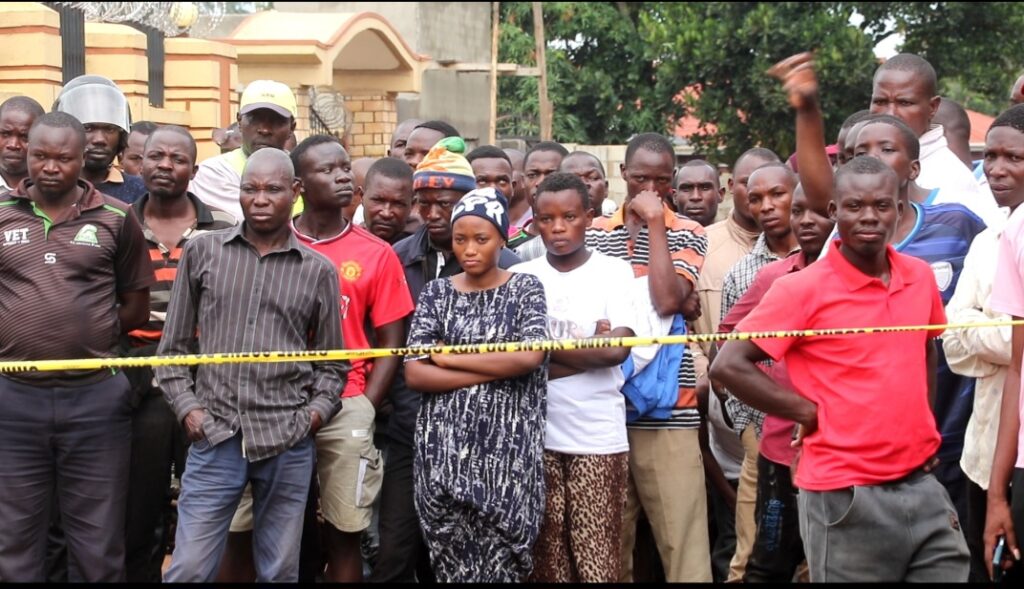
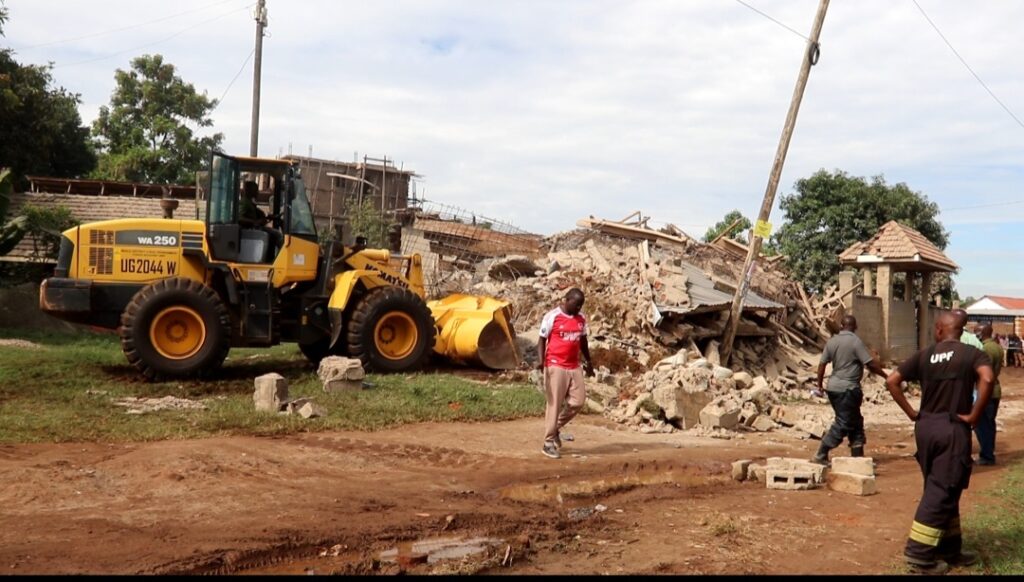
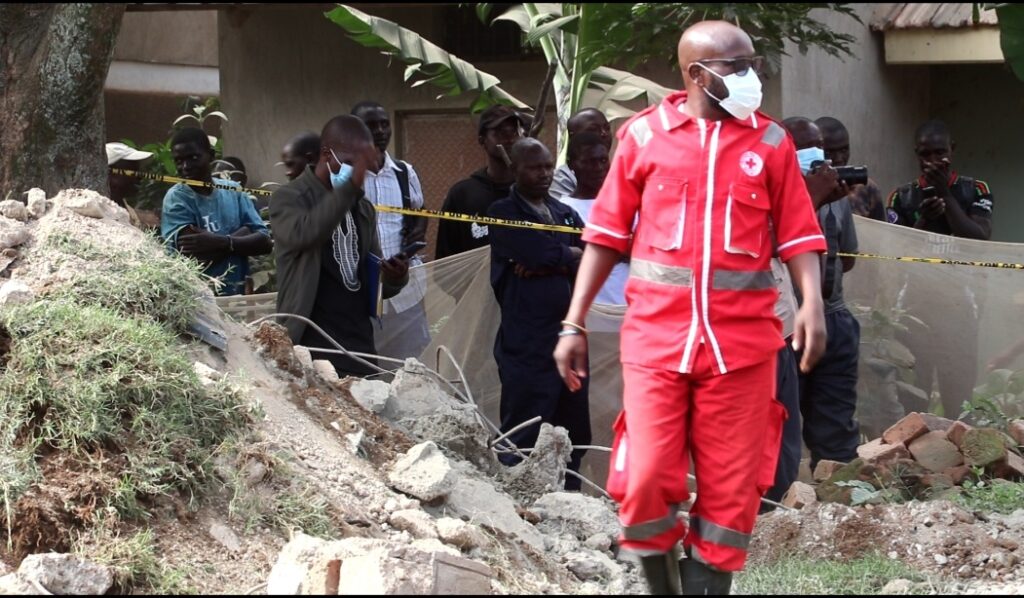
A wave of grief and anger has swept through Mbale City following a devastating building collapse in the early hours of the morning that has left at least one person dead and more than four others injured. The tragic incident occurred along Kachumbala Lane in Kachumbala Cell, Namakwekwe, within the Northern Division—turning what should have been a quiet night into a scene of chaos and loss.
According to eyewitness accounts, the collapse happened at around 2:00 a.m. Arinaitwe Phoebe, a resident of Gudoi Cell, recalls the terrifying moment. Awakened by the need to step outside, she was suddenly met with a thunderous crash that shook the neighborhood. Moments later, she realized that a nearby building had crumbled to the ground.
Phoebe, who had closely observed the construction process, raised concerns about the quality of materials used. She noted that the mixture appeared substandard and inconsistent with acceptable construction practices—an observation that now carries painful weight.
Another resident, Ahmed Muluga, revealed that the community had repeatedly warned those in charge about the questionable construction methods. Despite their concerns, the builders allegedly ignored all advice. Muluga further criticized the city authorities, accusing the Mbale City Engineer of failing to supervise the project effectively. He confirmed that two occupants were inside the building at the time of the collapse.
Technical experts have since weighed in, painting an even more alarming picture. Civil engineer Lubega Emmanuel attributed the collapse to poor workmanship and critical structural failures. He explained that the building required higher-grade materials, but inferior cement and weak metal rods were used instead. According to him, incorrect mixture ratios further compromised the building’s integrity, making collapse almost inevitable.
Adding to the concerns, Robert Magombe, a casual laborer who worked on the site, disclosed that workers had repeatedly raised red flags about the poor materials and unsafe construction practices. Instead of being heard, they were threatened with dismissal. He emphasized that the structure, which rose to five floors, was far too heavy for the weak materials used.
Engineer Dan Mukhwana, speaking to the press, placed significant blame on the city authorities. He alleged that despite collecting between 2 to 3 million shillings in supervision fees, officials failed to conduct proper inspections. He described the incident not as an accident, but as a consequence of systemic negligence.
“This is not just a collapse—it is a failure of responsibility,” he said. “Lives have been lost because those entrusted with oversight did not act.”
Mukhwana also issued a stark warning: many buildings in Mbale may be structurally unsound, and without immediate action, more tragedies could follow.
As families mourn and survivors recover, the people of Mbale are left demanding answers, accountability, and urgent reforms to ensure that no more lives are buried under preventable mistakes.